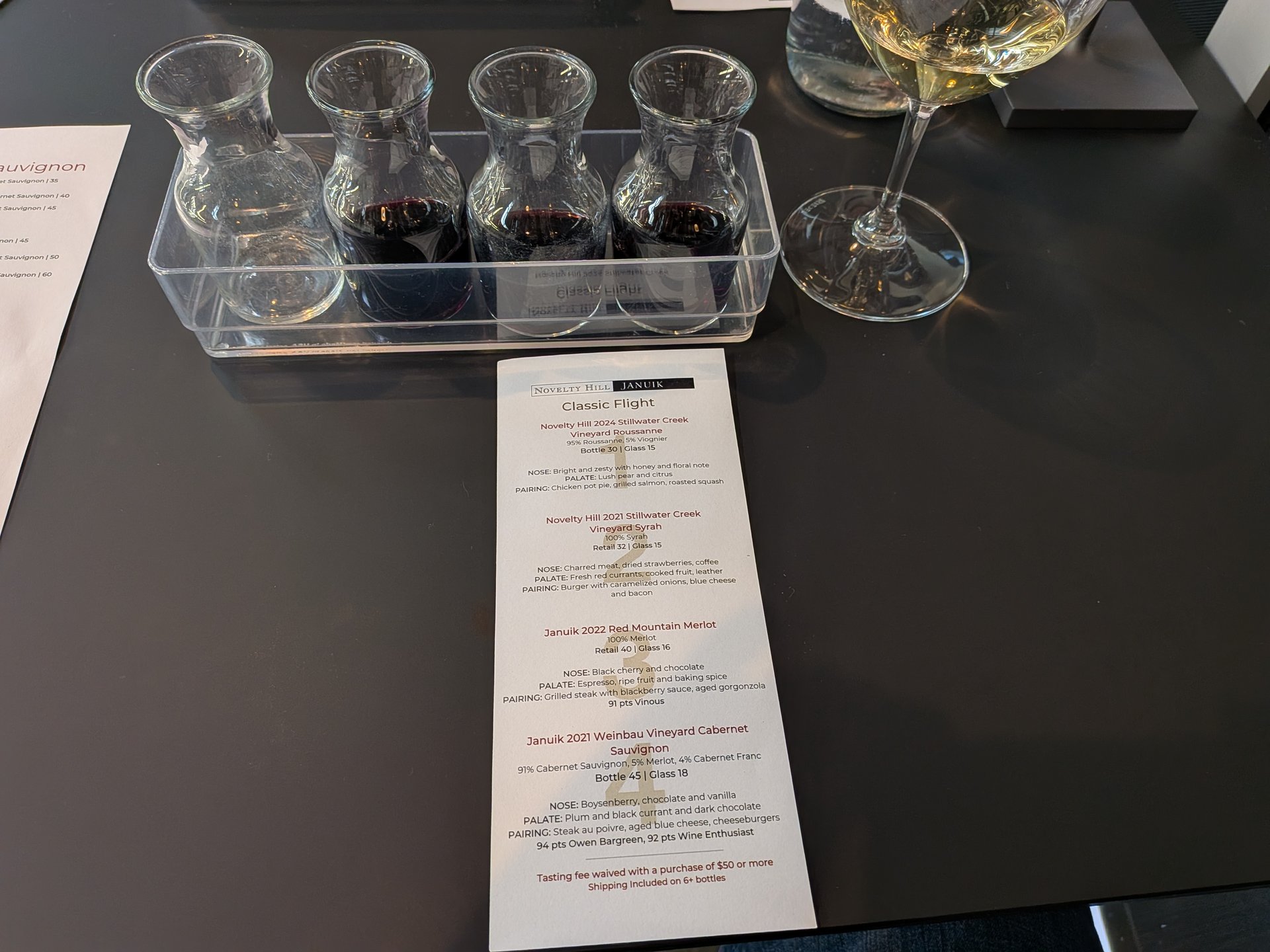
Yesterday we wrapped up a wonderful tasting at Novelty Hill Januik in Woodinville. Great wines, great host, no complaints. When we went to pay, the screen presented our tip options as a percentage of the total. Had we selected 20%, that would have been over $40 — for a tasting. We hit "custom amount" and left $10.
This is the norm now, not the exception. Wineries are using the same point-of-sale systems as coffee shops and restaurants, and those systems default to percentage-based prompts that don't really make sense in a tasting room context. The result is a moment of quiet panic at the end of what should be a relaxing experience.
So let's clear it up.
For a standard wine tasting, $5 to $10 per person is the right range. More for private or elevated experiences. And no, you shouldn't feel guilty about pressing that custom button.
Whether you're tasting in Woodinville, the Willamette Valley, or Paso Robles, the advice is largely the same — though local norms vary a bit, and we'll get into that. First, a simple framework.
What to Tip, by Tasting Type
The right amount depends less on a fixed percentage and more on the kind of experience you're having.
Bar or counter tasting. You walk up, a host pours you through a flight, maybe answers a few questions. This is the most common format at smaller wineries and the one most people picture when they think of wine tasting. Tip $5 to $10 per person. If the host was particularly knowledgeable, went off-menu with an extra pour, or spent real time with you, lean toward the higher end. Wine Spectator's Dr. Vinny column puts it simply: tipping isn't necessary since most tasting rooms charge a fee, but it's always appreciated when you've had great service. The Napa Tourist Guide recommends $10 to $15 per couple for this format, which aligns with the $5 to $10 per person range.
Seated or tableside tasting. You're at a table, the wines are presented in a more structured sequence, and your host is spending dedicated time with your group. This is increasingly common at wineries that require reservations. Think of it more like a guided experience. Tip $10 to $15 per person, or roughly 10–15% of the tasting fee. But note — this is where those POS percentage prompts start to get misleading. A 20% tip on a $50-per-person seated tasting is $10, which is perfectly reasonable. A 20% tip on a $100 reserve tasting for two people is $40, which is likely more than you intended. Flat dollar amounts are your friend here.
Private tours, reserve tastings, or barrel experiences. These are curated, often one-on-one or small group, and the host has typically prepared specifically for your visit. Tip 15–20% of the total cost, similar to what you'd leave after a nice dinner. Wine Enthusiast spoke with Elise Cordell, a senior brand ambassador at Pernod U.S.A., who noted that tasting room jobs are typically hourly and seasonal — so even a small gesture goes a long way when someone has delivered a memorable experience.
Quick stop to buy a bottle, no tasting. You're not obligated to tip. But if a staff member spent time helping you pick the right wine, explaining the differences, or packing your bottles with care, a couple of dollars is a nice acknowledgment.
Wine club members on a complimentary tasting. This is the one that catches people off guard. You're getting the tasting for free, but your host is doing the same work — pouring, educating, spending time with you. A tip here is especially appreciated. The fact that you're not paying a fee is all the more reason to recognize the service.
Why Tipping Still Makes Sense Here
We understand the impulse to push back. Tip fatigue is real and growing. A 2025 Bankrate survey found that 41% of Americans believe tip culture is "out of control," and researchers at WSU's Carson College of Business published a study showing that customers react negatively to tipping requests in settings where tipping feels new or forced — especially when prompted before any service has been provided.
But tasting rooms are different from the self-checkout screen at a frozen yogurt shop. And the WSU study actually points to why: what offsets tip fatigue is visible, personal service effort. That's exactly what a good tasting room host provides. They're spending 30 to 60 minutes with you, walking you through wines, answering your questions, telling the story of the vineyard and the people behind it. It's not transactional. It's hospitality.
A few other things worth knowing. The tasting fee doesn't go to your server. This is the most common misconception — people assume that because they paid $25 or $50 to taste, the person pouring is taken care of. That fee goes to the winery. It's like thinking the price of your entrée pays the waiter. Your host is typically earning an hourly wage, and in many cases the position is part-time or seasonal. Some wineries offer sales commissions on wine club signups or bottle purchases, but the structure varies widely. A direct tip is the most reliable way to say thanks.
And buying a bottle doesn't replace a tip, either. It supports the winery, which is great, but your host may see little or none of that sale. Wine Spectator's guidance on this is clear: a tip is more directly impactful for the person who served you.
How It Works in Washington Wine Country
If you're tasting in Woodinville or elsewhere in Washington, the vibe is a bit different from Napa or Sonoma. Tasting rooms here tend to be smaller, more intimate, and more casual. Many of Woodinville's 130-plus tasting rooms are housed in warehouse districts, and the person pouring your wine might also be the one who helped make it. The experience is personal by nature.
Heather Bradshaw of the Washington State Wine Commission puts it plainly: tipping is always appreciated but not necessarily expected. Her advice is to tip the same as you would at a bar or coffee shop. The Woodinville Wine Country site echoes this — local tasting room staff say a tip is a thoughtful gesture that shows appreciation for their time and expertise, especially after an exceptional experience.
One nuance worth noting: Washington has a statewide minimum wage of $16.66, and in Seattle it's $21.30. Unlike states where tipped workers earn a sub-minimum wage, tasting room staff in Washington are earning at least minimum wage before tips. That changes the math a bit — tipping here is less about making up for poverty wages and more about recognizing great hospitality. But that doesn't mean it doesn't matter. For hourly and seasonal workers, tips still make a meaningful difference.
We'll be adding guides for Oregon and California wine country tipping norms soon. [Sign up for PourPlan updates] to be the first to know.
When You Don't Need to Tip
Keeping it honest — there are situations where skipping the tip is perfectly fine.
You had a brief, transactional experience with no real personal attention. You paid a tasting fee, tasted the wines, and moved on. No one went above and beyond, and you didn't feel a personal connection. That's okay. Not every tasting is a tipping occasion.
The winery has a no-tipping policy. Some do, and their staff are compensated accordingly. If you're told tips aren't accepted, take them at their word and don't feel awkward about it.
You joined the wine club or bought a case. Your host likely earns a commission or bonus on that transaction. A tip on top of a major purchase is a generous move but not an expectation. If the service was exceptional, by all means — but don't feel obligated.
You're at a large event or festival with shared pouring stations. The logistics of tipping in a festival setting are completely different. If there's a communal tip jar, tossing in a few dollars is thoughtful. But this isn't the same as a one-on-one tasting experience.
Making It Easy on Yourself
A few practical things that take the stress out of it.
Bring cash. Many tasting rooms are small operations, and cash tips are the simplest for everyone. Before a tasting day, grab a stack of $5 and $10 bills and earmark them for tips. You won't have to think about it in the moment.
If you're paying by card and the screen offers percentage-based options, don't hesitate to hit "custom amount." As we learned at Novelty Hill Januik, the default percentages are often calibrated for restaurants, not tastings. A $5 to $10 flat tip per person is appropriate regardless of what the screen suggests.
Tip at the end of your tasting, not the beginning. It's a natural closing gesture, like leaving a tip on the table as you leave a restaurant.
A verbal compliment goes further than you think. Telling the manager that your host was fantastic — especially at a smaller winery — can influence scheduling, advancement, and recognition in ways that a cash tip can't. If you had a great experience, say so. The two aren't mutually exclusive.
The PourPlan Take
Wine tasting — especially in a place like Woodinville where the rooms are intimate and the hosts are genuinely passionate — is built on a human connection. Someone is sharing something they care about with you. A tip is one small, tangible way to honor that exchange.
You don't need to overthink it. You don't need to match restaurant percentages. And you definitely don't need to feel guilty about pressing "custom amount" on the screen.
Five to ten bucks, a genuine thank you, and maybe a bottle to take home. That's the whole move.
Sources & Further Reading
- Wine Spectator — "Should I Tip the Pourers in a Tasting Room?" — Dr. Vinny's widely cited take on the basics of tasting room tipping.
- Wine Spectator — "Should I Tip on Wine Bottles at a Tasting Room?" — Addresses whether purchasing wine changes the tipping equation.
- Wine Enthusiast — "Rules for Winery Tasting Room Etiquette" — Includes perspectives from tasting room professionals on compensation and tipping.
- Woodinville Wine Country — "Insider Tips for an Unforgettable Wine Tasting Experience" — Local guidance from Woodinville tasting room associates.
- Seattle Times — "What to Expect on Your Washington Wine-Tasting Weekend Getaway" — Features the Washington State Wine Commission's Heather Bradshaw on tipping norms.
- Napa Tourist Guide — "Do I Tip the Wine Tasting Server in Napa?" — The most detailed practical breakdown by tasting format.
- Axios Seattle — "Why Some Seattle Diners Are Wrestling with Tip Fatigue" — Current data on shifting tipping attitudes in the Pacific Northwest.
- WSU Carson College of Business — "Study: To Battle Tip Fatigue, Businesses Should Make Their Service Efforts Visible" — Academic research on when tipping requests feel appropriate versus intrusive.